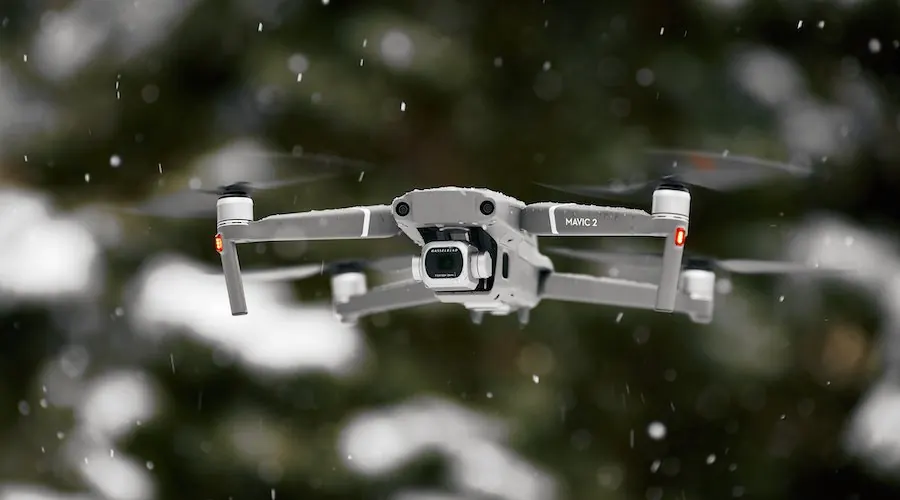
Short answer: most consumer drones should not be flown in rain. Popular camera drones from DJI, Potensic and others aren’t rated as waterproof, and water can short the electronics, fog the camera and cut flight time. A few specialist drones carry IP water-resistance ratings, but even those have limits.
Why rain is a problem
- Electronics: motors, the flight controller and the battery contacts are open to the air on most drones. Water can cause shorts or corrosion.
- Sensors: wet vision sensors and camera lenses can confuse obstacle avoidance and positioning.
- Batteries: lithium batteries shouldn’t get wet, and cold rain lowers their performance.
- Visibility: rain reduces how far you can see. You must keep your drone within visual line of sight, and Part 107 pilots need at least 3 statute miles of visibility (14 CFR 107.51).
- Warranty: manufacturers generally don’t cover water damage under the standard warranty.
What about light drizzle or mist?
Even light drizzle can collect on the drone and in the gimbal. The cautious rule: if it’s raining or likely to rain during your flight window, don’t take off. Fog and mist also leave moisture behind and cut visibility.
What IP ratings mean
An IP (Ingress Protection) rating such as IP43 or IP67 describes resistance to dust (first digit) and water (second digit). A “4” for water means protection against splashing; “7” means short-term immersion under test conditions. Most consumer drones have no IP rating at all. See our guide to waterproof drones.
If your drone gets wet
- Land as soon as it’s safe and power off.
- Remove the battery and dry the outside with a soft cloth.
- Let everything air-dry in a warm, dry room. Don’t use a heat gun.
- Inspect for moisture in the camera or battery compartment before powering on. If in doubt, contact the manufacturer’s support.
- Don’t charge a battery that has been soaked; follow the manufacturer’s disposal guidance.
Plan around the weather
Check the forecast and radar before you leave. Our weather guide covers wind, cold and visibility; also see how to avoid crashes and the drone rules hub.