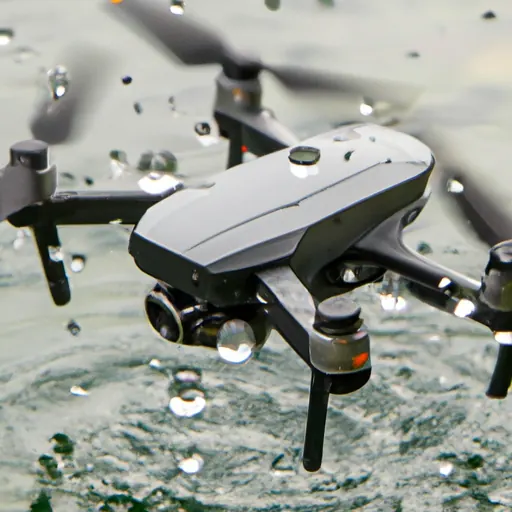
Short answer: yes, a small number of drones are built to be water-resistant or waterproof, mainly for fishing, boating and marine work. But the popular camera drones most beginners buy (DJI Mini, Flip, Neo, Potensic Atom) are not waterproof.
Understanding IP ratings
Water resistance is described with an IP (Ingress Protection) code under the IEC 60529 standard. The first digit is dust protection (0–6) and the second is water protection (0–9).
| Rating (water digit) | Meaning |
|---|---|
| IPX3 | Spraying water (light rain) |
| IPX4 | Splashing from any direction |
| IPX5 / IPX6 | Water jets |
| IPX7 | Temporary immersion (test: up to 1 m for 30 minutes) |
| IPX8 | Continuous immersion beyond 1 m (conditions set by the maker) |
“Water-resistant” (IP43, IP45 and similar enterprise drones) means the drone can work in rain, not that it can land on water. “Waterproof” marine drones (often IP67) are sealed and float, so they can take off and land on water.
Types of water-capable drones
- Marine / fishing drones: sealed, floating bodies, often with a payload release for bait. See drones for fishing.
- Enterprise drones with IP ratings for working in rain (inspection, public safety).
- Underwater drones (ROVs): tethered submersibles, not aircraft at all.
Buying tips
- Check the exact IP rating and what the maker says about salt water.
- Rinse with fresh water after saltwater use if the manual allows.
- Waterproof doesn’t mean wind-proof; marine conditions are often windy.
- Check that the model is FCC-authorized for US sale. New foreign-made models can’t be authorized since December 2025 (FCC FAQ), so some waterproof drones sold overseas aren’t available here.
- Drones of 250 g or more must be registered and comply with Remote ID (FAA); most marine drones are well over 250 g.
Related: can drones fly in rain? · weather and drones