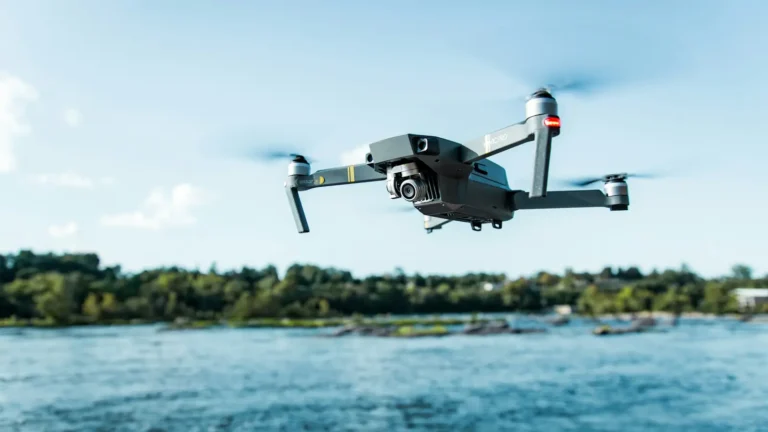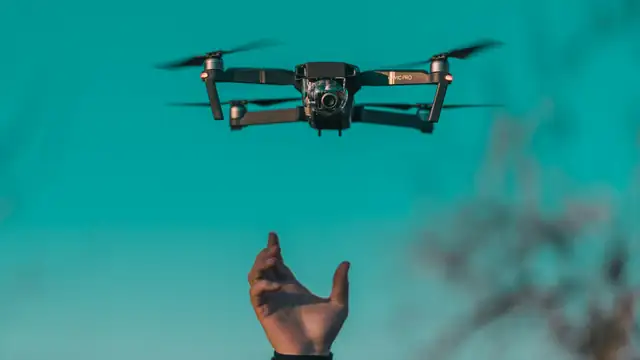
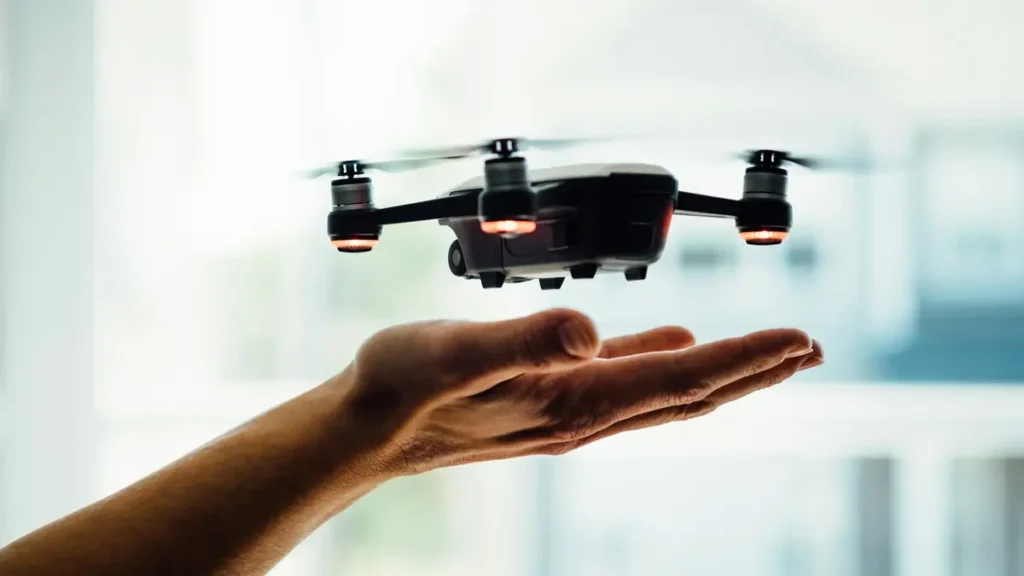
Short answer: yes. Small, light drones with propeller guards are the best choice indoors: toy quadcopters, “tiny whoop” FPV drones, and palm-sized selfie drones. Larger GPS camera drones can fly indoors, but they’re harder to control because GPS doesn’t work inside.
What makes a good indoor drone
- Small and light: less damage if it hits something (or someone).
- Propeller guards or ducts around the props.
- Downward vision positioning to hold a hover without GPS (needs good lighting and a textured floor).
- Slow speed modes for beginners.
Examples (as of Oct 2026)
| Drone | Weight | Guards | Obstacle sensing | Notes |
|---|---|---|---|---|
| DJI Neo | 135 g | Yes, full guards | None | Palm takeoff; $169 list at DJI Store (DJI) |
| DJI Flip | Under 249 g | Yes, full-coverage folding guards | Forward infrared braking | $439 list (DJI) |
| HOVERAir X1 / X1 Pro | 125 g / 192 g | Enclosed props | Pro: rear ToF | $299 / from $499 (HOVERAir) |
| Tiny whoop FPV | Typically under 50 g | Ducted | None | Great for learning manual control |
Stock of DJI models was limited in the US in October 2026. See our beginner drone guide for the current picture.
Indoor flying safety tips
- Clear the room; keep pets and children out.
- Turn off ceiling fans and close doors to stop drafts.
- Fly in good, even lighting so vision positioning works.
- Expect drift near walls and ceilings (prop wash bounces back).
- Keep altitude low and speed slow.
Do FAA rules apply indoors?
FAA drone rules govern flying in the National Airspace System outdoors. Flying fully inside an enclosed building is generally treated differently, but property-owner rules, venue policies and common sense still apply, and once you fly outside, all the usual rules do. See Drone Rules.
Related: what is FPV? · avoiding crashes