Drone batteries are lithium-polymer (LiPo) or lithium-ion. Stored well, they last for hundreds of cycles; stored badly, they swell, lose capacity, or become a fire risk. Always follow your drone maker’s battery manual first. The tips below are general practice.
The key rules
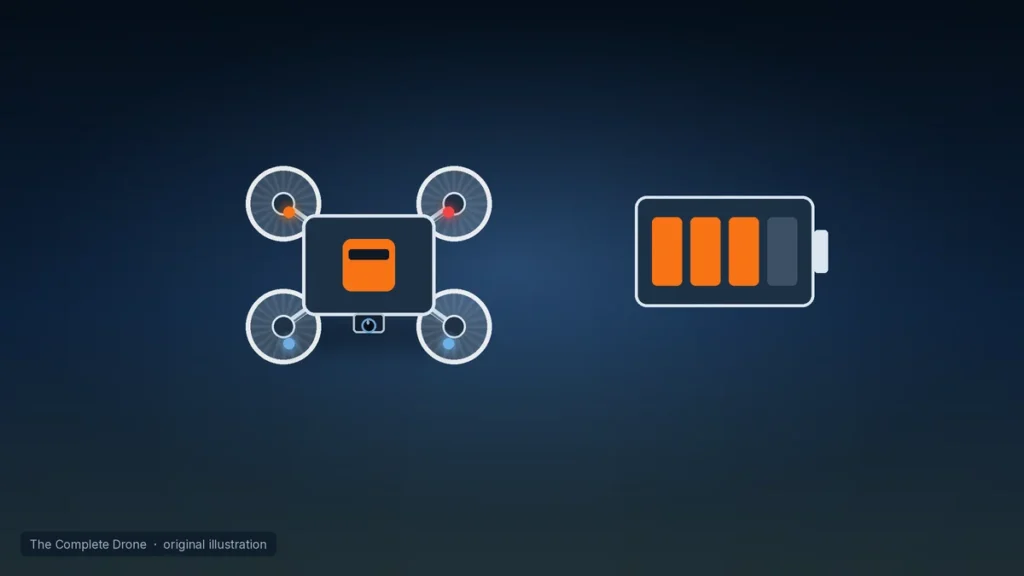
- Store at partial charge. For anything longer than a few days, keep batteries at a “storage” level, roughly 40–60% (around 3.8 V per cell for LiPo), not full and not empty.
- Use smart-battery features. Many smart batteries (including DJI’s) automatically discharge to a storage level after a set number of days. Check the setting in your app or manual.
- Cool, dry room temperature. Avoid hot cars, sunny windowsills, and freezing garages.
- Fireproof container. A LiPo-safe bag or metal ammo-style box (without an airtight seal) on a non-flammable surface adds protection.
- Away from metal objects like keys or coins that could short the contacts.
- Top up every few months. Batteries slowly self-discharge; don’t let them drop to empty in storage.
Warning signs: retire the battery
- Swelling or puffing
- Damage, dents or a cracked case
- Getting unusually hot when charging
- Error messages or cells badly out of balance in the app
Don’t put damaged lithium batteries in household trash. Take them to a battery recycling drop-off; many hardware and electronics stores accept them.
Traveling with drone batteries
For US flights, the FAA’s PackSafe rules say spare lithium batteries go in carry-on bags only, with terminals protected against short circuits. Batteries up to 100 Wh are allowed without airline approval; 101–160 Wh need airline approval and are limited to two spares (FAA PackSafe). Most consumer drone batteries are well under 100 Wh; the rating is printed on the battery.
Charging safely
- Use the manufacturer’s charger.
- Let a hot battery cool after a flight before charging.
- Don’t charge unattended or overnight on a bed or couch.
Next: how to increase drone battery life · how long drones can fly
Sources
- FAA PackSafe: Lithium batteries
- Your drone’s battery safety guidelines (in the box and on the manufacturer’s support site)