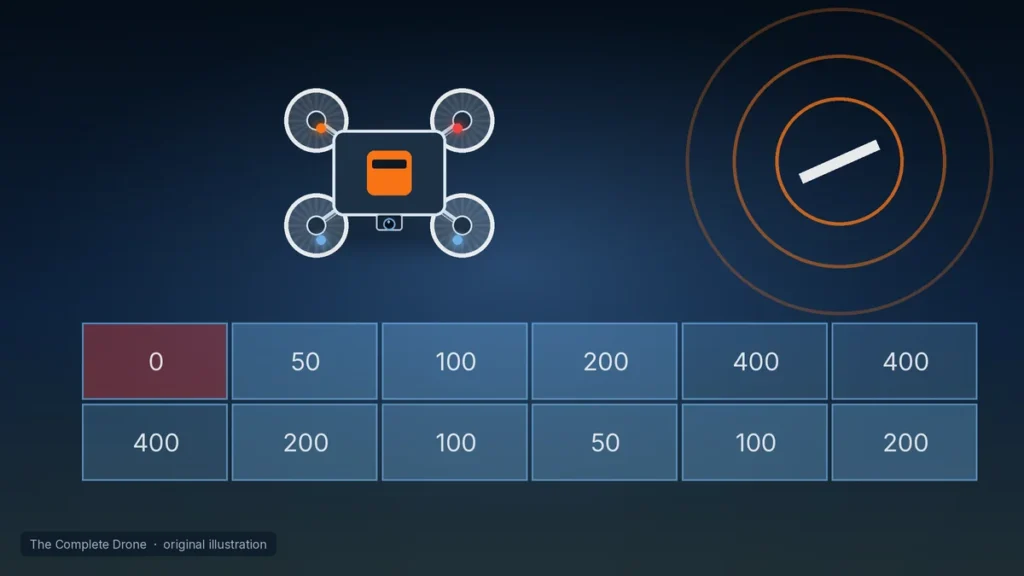
Research-based guide, current as of November 2026. The process, the airport count and the list of approved apps come from the FAA’s LAANC, B4UFLY, UAS Facility Map and airspace-authorization pages, all linked below. We haven’t written this from our own LAANC requests; we’ll add first-hand notes when we have them.
Quick answer: LAANC (Low Altitude Authorization and Notification Capability) is how you get FAA permission to fly a drone in controlled airspace near airports, usually in seconds. You don’t apply to the FAA directly. You use an app from an FAA-approved provider (such as Aloft, Airspace Link, Avision or UASidekick), pick your location, time and altitude, and request up to the ceiling shown on the FAA’s UAS Facility Map. As of November 2026 the FAA says LAANC covers 726 airports. It’s free from the FAA, and both Part 107 pilots and recreational flyers can use it.
If you’ve searched “no fly zone for drones near me” and found yourself in a shaded circle around an airport, that usually isn’t a no-fly zone. It’s controlled airspace, and LAANC is the normal way in. This guide explains when you need it, how to request it, and what it doesn’t cover. Start with Where Can I Fly My Drone? if you’re not sure what kind of airspace you’re in.
When you need LAANC
The FAA says drone pilots planning to fly under 400 feet in controlled airspace around airports must get an airspace authorization before they fly (FAA: LAANC). Controlled airspace near the surface means Class B, C, D, and surface-area Class E. In uncontrolled Class G airspace you don’t need authorization, but you still stay at or below 400 feet.
- Recreational flyers must register a drone that needs it, pass TRUST, and get authorization before flying in controlled airspace (FAA: Recreational Flyers).
- Part 107 pilots need a registered drone and a Remote Pilot Certificate to use LAANC. See our Part 107 hub.
How LAANC works
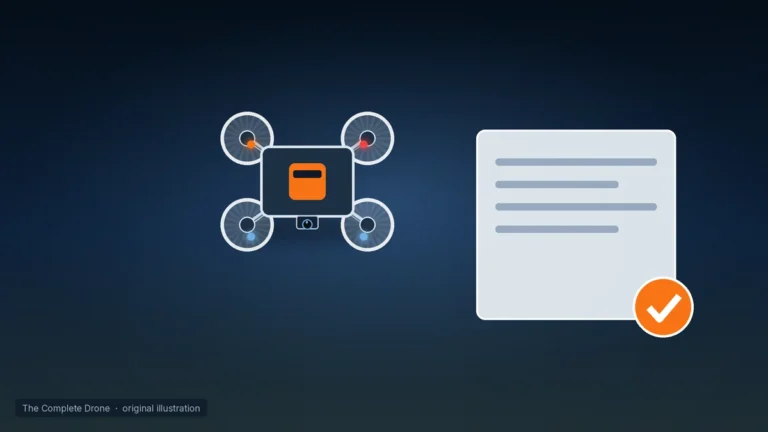
You send a request through a company the FAA has approved as a UAS Service Supplier (USS). The request is checked automatically against FAA data: UAS Facility Maps, special use airspace, airports and airspace classes, Temporary Flight Restrictions (TFRs) and NOTAMs. If it’s approved, you get the authorization in near-real time. Unless the authorization says otherwise, you don’t need to call the tower before you fly (FAA).
UAS Facility Maps: the numbers in the grid
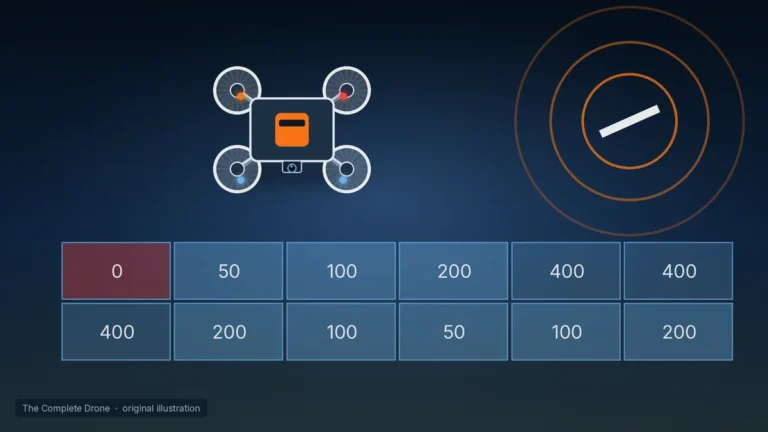
Around each airport, the FAA divides controlled airspace into grid squares, each with a maximum altitude in feet above ground. Those are the altitudes the FAA can approve without extra safety review. A “0” square, usually right next to a runway, means no automatic approval. The maps themselves don’t authorize anything; you still have to request authorization (FAA: UAS Facility Maps). Your LAANC app shows the grid ceiling automatically.
How to request LAANC authorization, step by step
- Be legal to fly first. Register your drone if it needs it (how-to), and hold either a TRUST certificate (recreational) or a Part 107 certificate.
- Pick an FAA-approved LAANC app. See the table below.
- Enter your flight area. Draw or drop your location on the map. The app shows whether it’s controlled airspace and what the grid ceiling is.
- Choose date, time, duration and maximum altitude. Stay at or below the grid altitude for an automatic approval. The FAA says requests can be submitted up to 90 days ahead.
- Submit and wait for the approval message. Usually it arrives within seconds. Keep it handy in case you’re asked about it.
- Check everything LAANC doesn’t cover. Before you take off, check NOTAMs, TFRs, weather and local rules.
FAA-approved LAANC apps (November 2026)
From the FAA’s list of companies providing public LAANC services, last updated September 29, 2026. “Recreational” means the provider supports flyers under the Exception for Recreational Flyers (49 U.S.C. 44809).
| Provider | Recreational | Part 107 further coordination | iOS | Android | Desktop |
|---|---|---|---|---|---|
| AirMatrix | Yes | Yes | No | No | Yes |
| Airspace Link | Yes | Yes | Yes | Yes | Yes |
| Aloft | Yes | Yes | Yes | Yes | Yes |
| AstraUTM | Yes | Yes | Yes | Yes | No |
| AutoPylot | Yes | No | Yes | Yes | Yes |
| Avision | Yes | Yes | Yes | Yes | Yes |
| Flightloop | Yes | No | No | No | Yes |
| FlightReady | Yes | Yes | Yes | No | No |
| Flyfreely | No | Yes | No | No | Yes |
| SkedFlex | Yes | Yes | No | No | Yes |
| UASidekick | Yes | Yes | Yes | Yes | Yes |
| Wing | Yes | No | Yes | Yes | No |
All 12 offer Part 107 near-real-time authorization. Airspace Link, Aloft, AutoPylot, Avision, FlightLoop and UASidekick are also FAA-approved B4UFLY providers, so one app can handle both “can I fly here?” and the authorization (FAA: B4UFLY). Check each app’s own pricing; the FAA list doesn’t cover it.
Recreational vs Part 107: what’s different
| Recreational flyer | Part 107 pilot | |
|---|---|---|
| Near-real-time approval at or below grid altitude | Yes | Yes |
| “Further coordination” above the grid (up to 400 ft) | No | Yes, submitted up to 90 days ahead and reviewed manually by the FAA |
| Night authorization through LAANC | Yes, per the FAA’s recreational authorization page | Yes (the night rules under Part 107 also apply) |
| Airports without LAANC | Manual request in FAA DroneZone | Manual request in FAA DroneZone |
Sources: FAA: LAANC, FAA: Airspace Authorizations for Recreational Flyers, FAA: Part 107 Airspace Authorizations.
What if the airport isn’t LAANC-enabled?
You can still request authorization manually through FAA DroneZone. It isn’t instant. For Part 107 requests, the FAA says processing has historically taken up to eight weeks, so apply early. Recreational requests in DroneZone are also processed manually at FAA Air Traffic Service Centers. In both cases, request only up to the altitudes on the UAS Facility Map.
What LAANC does not do
- It doesn’t override TFRs or NOTAMs. The FAA says LAANC “provides airspace authorizations only,” and you must still check NOTAMs, weather and all airspace restrictions. Stadium, VIP and wildfire TFRs can pop up with little notice. Check tfr.faa.gov or your B4UFLY app.
- It doesn’t cover local rules. Parks, cities and private property owners can limit where you take off and land, even where the airspace is fine.
- It doesn’t waive other rules. Line of sight, giving way to crewed aircraft and Remote ID still apply. Part 107 waivers (for example, beyond visual line of sight) are separate requests in DroneZone.
Common mistakes
- Requesting more altitude than the grid allows and then flying anyway while the request sits in further coordination. You aren’t authorized until you’re approved.
- Letting the authorization window lapse mid-flight. Request a little more time than you need.
- Reading “0” on the map as a typo. It means no automatic approval in that square.
- Forgetting that Class G airspace still has a 400-foot ceiling and can still have a TFR.
Part 107 students: authorizations and airspace classes are a big part of the knowledge test. Our sectional chart guide shows how controlled airspace appears on the charts.
Frequently asked questions
Does LAANC cost anything?
The FAA doesn’t charge for authorizations. The apps are run by private companies, so check each provider’s own terms.
Can recreational flyers use LAANC?
Yes. 11 of the 12 approved providers support recreational flyers. Recreational flyers must stay at or below the grid altitude, because further coordination is only for Part 107 pilots.
How far in advance can I request LAANC?
The FAA says up to 90 days ahead, and near-real-time requests can be made the day you fly.
Do I need to call the control tower?
Not unless your authorization specifically asks you to, according to the FAA.
Related guides
- Start Here: your first drone in the US, step by step
- Where Can I Fly My Drone? No-fly zones and airspace
- Drone Rules & Registration (2026)
- The FAA TRUST Test: What It Is and How to Pass
- Part 107: how to get your FAA drone license
- How to Read a Sectional Chart